
USCIS is now scheduling affirmative asylum interviews much more quickly than in previous years. At the same time, new strict rules are in effect that every asylum applicant must follow carefully.
Important: Some cases may be sent straight to Immigration Court without an asylum interview.
This is NOT a denial. Your case simply moves to immigration court, where an Immigration Judge will decide it.
This is NOT a denial. Your case simply moves to immigration court, where an Immigration Judge will decide it.
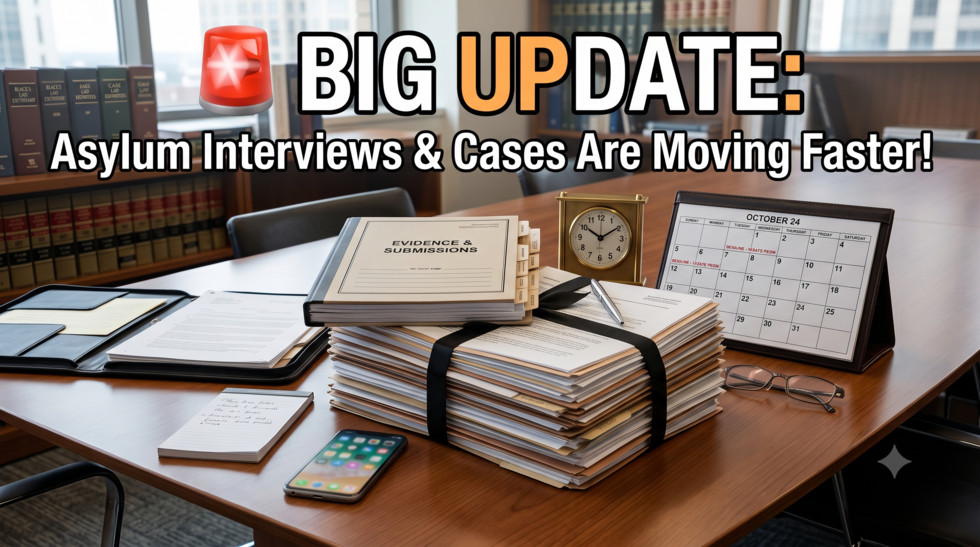
New Strict Rules You Must Know
- Submit all evidence at least 14 calendar days before your interview Evidence submitted later may be rejected or may cause your interview to be rescheduled (which can hurt your work-permit clock).
- Rescheduling is now much harder You must show “exceptional circumstances” (serious illness, extreme hardship, etc.). Ordinary scheduling conflicts are usually not enough.
- File strong evidence from day one Because some cases can now be referred to court without an interview, the strength of the evidence you submit with (or soon after) your Form I-589 is more critical than ever.
Bottom line: Do not wait until you receive an interview notice to start gathering documents, translations, country-condition reports, medical records, police reports, witness statements, and a detailed personal declaration.
What You Should Do RIGHT NOW
- File Form G-28 (Notice of Entry of Appearance as Attorney) so your lawyer can receive all notices and communicate with USCIS on your behalf.
- Check your case status weekly on both the USCIS online account and the EOIR (immigration court) system.
- Update your address immediately with Form AR-11 if you have moved. Missing a notice can seriously damage your case.
Don't wait. Protect your case.

Comments
There are no comments for this post. Be the first and Add your Comment below.
Leave a Comment