
Getting a green card feels like the finish line for many people. After years of paperwork, interviews, waiting, and uncertainty, you finally hold that card that says you can live and work permanently in the United States. It is a huge milestone — and for most people, it is exactly what it promises: permanent residence.
But “permanent” does not always mean “untouchable.” In the current immigration climate, more green card holders are asking the same quiet, nervous question: Is my green card actually safe?
The short answer is that most lawful permanent residents (LPRs) have nothing to worry about if they follow the rules. The longer, more honest answer is that certain actions, absences, criminal issues, or even routine USCIS reviews can put your status in danger. Understanding those risks is the first step to protecting the life you have built here.
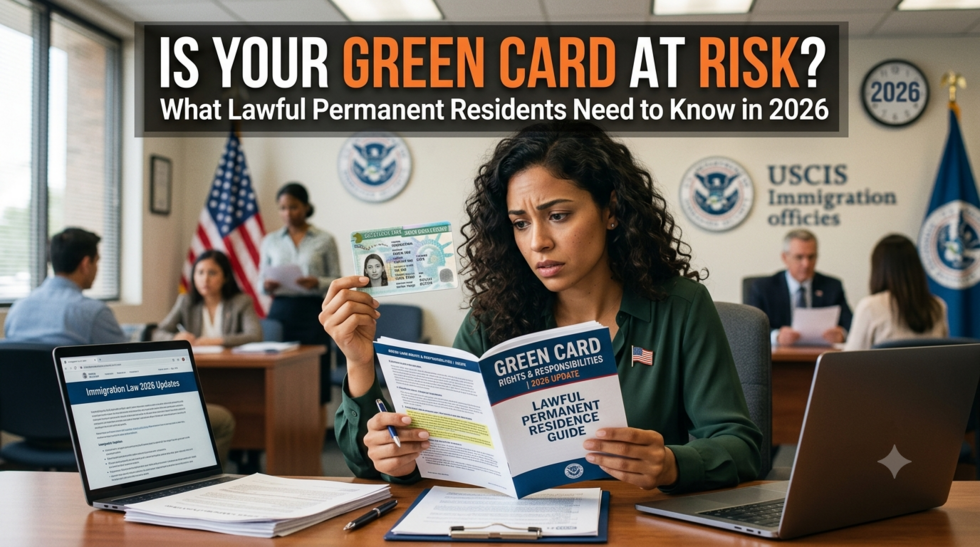
Why Green Cards Are Not Always as Permanent as They Sound
A green card gives you the right to live and work in the United States indefinitely. It does not, however, give you the same absolute protection that U.S. citizenship does. Immigration law still treats lawful permanent residents as non-citizens who can lose their status under specific circumstances.
In recent years, enforcement priorities have tightened. USCIS has expanded vetting, re-reviewed certain approved cases, and increased the likelihood that criminal records or long trips abroad will trigger problems. For people from countries labeled higher risk, extra scrutiny has become more common. None of this means every green card is under attack — but it does mean the margin for error has gotten smaller.
The Most Common Ways a Green Card Can Be Put at Risk
1. Spending Too Much Time Outside the United States
This is one of the quietest and most frequent ways people lose permanent resident status. You are allowed to travel. What you are not allowed to do is treat the United States as a place you visit rather than the place you live.
As a general rule:
- Absences of less than six months are usually fine.
- Absences of six months to one year create a presumption that you may have abandoned your residence.
- Absences of one year or longer almost always require a reentry permit if you want to return without major problems.
Even shorter trips can raise questions if you keep strong ties abroad (a job, a house, family) and weak ties in the U.S. Officers look at the whole picture: where your family lives, where you pay taxes, where you keep your bank accounts, and whether your life still centers on the United States.
2. Criminal Convictions and Even Some Arrests
Not every criminal issue leads to deportation, but many do. Immigration law treats certain crimes differently from criminal courts. A conviction for a crime involving moral turpitude, a drug offense (including some marijuana-related cases), domestic violence, firearms violations, or anything classified as an aggravated felony can make you deportable.
What surprises many people is that even old convictions, minor-seeming charges, or cases that were reduced or deferred can still create immigration consequences. Accepting a plea deal without checking the immigration impact first is one of the most common and painful mistakes we see.
3. Failing to File Taxes or Maintain Good Standing
Green card holders are required to file U.S. tax returns on their worldwide income. Consistent failure to file, or filing as a non-resident when you should not, can be used as evidence that you have abandoned your status or that you are not complying with the obligations of permanent residence.
4. USCIS Re-Reviews and Heightened Vetting
In late 2025, USCIS announced it would re-examine certain green cards granted in the previous five years, particularly for nationals of designated higher-risk countries. These reviews can lead to requests for more evidence, new interviews, or, in rare cases, referral for further action if officers believe there are security or public-safety concerns.
Even if you are not from one of those countries, broader vetting of social media, travel history, and past applications has become more common. Inconsistencies that were overlooked years ago can suddenly matter.
5. Applying for Naturalization When You Have Problems
Many people think applying for citizenship is the safest next step. In some situations it is. In others, filing Form N-400 can put a spotlight on issues that were previously quiet — old criminal records, long absences, or questions about how the green card was obtained. Under current guidance, USCIS is more likely to issue a Notice to Appear if it finds someone deportable while reviewing a naturalization application.
6. Fraud or Misrepresentation in the Original Application
If USCIS later discovers that material facts were withheld or false information was provided when the green card was obtained, it can move to rescind the status. This is less common than travel or criminal issues, but it is serious when it happens.
What You Can Do to Protect Your Green Card
Practical steps that make a real difference:
- Keep your trips abroad reasonably short and document your ties to the U.S. (lease, job, family, taxes, bank accounts).
- If you must stay outside the country for six months or more, consider applying for a reentry permit before you leave.
- Never accept a plea deal or resolve a criminal charge without first speaking to an immigration attorney about the consequences.
- File your U.S. tax returns every year as a resident, reporting worldwide income.
- Carry your green card when you travel and renew it before it expires (Form I-90).
- Think carefully before filing for naturalization if you have any past issues that could raise red flags.
- Keep copies of everything related to how you obtained your green card and any later correspondence with USCIS.
When You Should Talk to an Immigration Attorney
You do not need a lawyer for every routine matter. You should strongly consider speaking with one if:
- You have any criminal history, even if it seems minor or old.
- You have spent (or plan to spend) long periods outside the United States.
- You received a notice from USCIS asking for more information or scheduling a new interview.
- You are thinking about applying for citizenship and are unsure whether your record is clean enough.
- You are from a country that has been subject to heightened review or travel restrictions.
- Something about your original green card process feels incomplete or inconsistent.
Early advice is almost always less stressful and less expensive than trying to fix a problem after USCIS or ICE has already started looking closely at your case.
How Malik Law, PLLC Can Help
At Malik Law, PLLC, attorney Richa Malik and our team work with individuals and families every day who are navigating exactly these concerns. We help green card holders understand their real level of risk, prepare for travel or naturalization applications, respond to USCIS requests, and, when necessary, defend against efforts to take away permanent resident status.
We know that behind every green card is a person who has already invested years of effort, hope, and planning. Our goal is to help you protect that investment with clear guidance and careful strategy — not scare tactics or one-size-fits-all answers.
Concerned about your green card status?
The best time to get clarity is before a problem becomes urgent.
Contact Malik Law, PLLC today to schedule a consultation. We will review your situation, explain your options in plain language, and help you take practical steps to protect the life you have built in the United States.
Visit maliklawpllc.com or call our office to get started.
Final Thoughts
A green card is one of the most valuable documents a non-citizen can hold. For the vast majority of people who follow the rules, keep their ties to the United States strong, and stay out of serious legal trouble, it remains secure.
But immigration enforcement and review practices have changed. What used to be a quiet background risk for some people is now more visible. Staying informed, avoiding common pitfalls, and getting personalized advice when something feels off are the simplest ways to keep your permanent residence exactly that — permanent.
If you have questions about your own situation, you do not have to figure it out alone. Reach out. Clarity is better than worry.

Comments
There are no comments for this post. Be the first and Add your Comment below.
Leave a Comment